

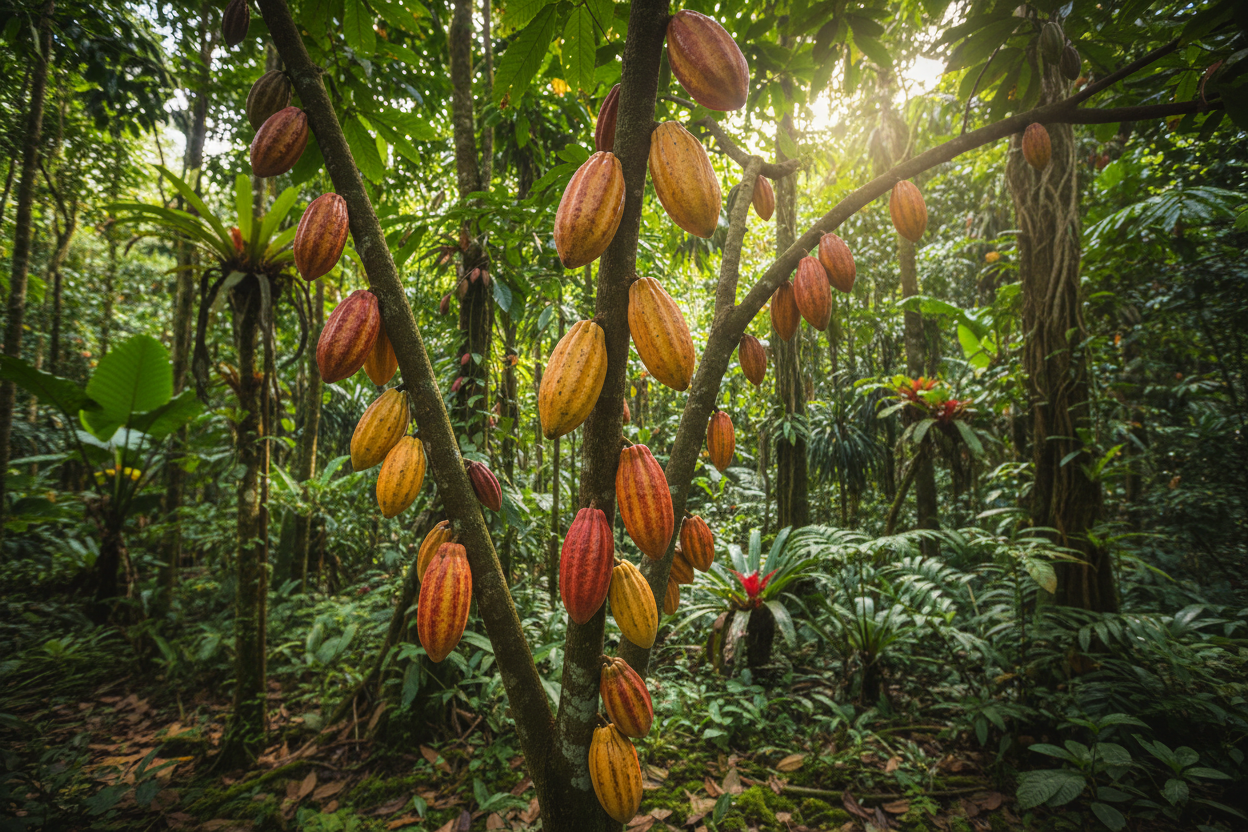
Cacao: A Plant That Stands Apart
Few plants in human history have been valued both for their ceremonial meaning and their physical nourishment. Cacao is one of them. From ancient ritual drink to modern wellness staple, cacao has remained relevant not because it promises quick effects, but because it supports the body and mind at the same time. This dual role is what makes cacao stand apart.
From Sacred Drink to Global Tradition
Cacao originates from the tropical regions of Central and South America, where it was cultivated thousands of years ago by Mesoamerican civilizations such as the Maya and the Aztecs. In these cultures, cacao was not consumed casually. It was prepared as a bitter, spiced drink and used in ceremonies, offerings, and important social gatherings.
The name cacao itself comes from ancient Indigenous languages and was later adopted into Spanish and European vocabulary. When cacao reached Europe in the 16th century through Spanish trade routes, it was initially consumed as a drink rather than a sweet. Over time, sugar and milk transformed it into what we now recognize as chocolate, but the original form of cacao remained preserved in traditional use.
Ceremonial Cacao, Then and Now
In ceremonial contexts, cacao has always been valued for how it makes people feel. It was seen as grounding, connecting, and opening, both individually and collectively. These qualities are why cacao ceremonies still exist today.
Modern cacao ceremonies often focus on presence, intention, and connection, whether practiced alone or in groups. What draws many people to cacao is that it does not overwhelm. It supports awareness rather than distraction and invites a slower, more embodied experience.
This ceremonial quality is not separate from cacao’s physical effects. In many ways, it is directly linked to them.
A Nutrient-Dense Plant
Ceremonial grade cacao is minimally processed, which allows it to retain much of its natural composition. Cacao powder is made by fermenting and lightly roasting cacao beans before milling them into a powder. Compared to conventional cocoa powder, cacao is processed at lower temperatures, preserving more of the bean’s original compounds.
Cacao naturally contains fibre, minerals such as magnesium and iron, and a wide range of plant compounds, especially flavonoids. These compounds are widely studied for their role in supporting the body’s normal balance and resilience.
Supporting the Heart and Circulation
One of the most studied areas of cacao research relates to circulation and heart health. Cocoa flavanols are associated with supporting nitric oxide availability in the body, a molecule involved in relaxing blood vessels and promoting healthy blood flow.
This mechanism is also linked to maintaining healthy cholesterol balance and supporting the body’s natural inflammatory response. Rather than targeting one marker in isolation, cacao appears to support cardiovascular function in a broader, more integrated way. This may help explain why cacao is often experienced as physically warming and gently energising, without creating nervous tension.
Energy Without Disruption
Cacao contains theobromine, a naturally occurring compound related to caffeine but typically experienced as smoother and longer-lasting. Instead of producing sharp spikes in alertness, cacao tends to support steady energy and focus.
This quality is essential to its ceremonial use. Cacao helps people stay present, open, and engaged, rather than overstimulated. The body feels supported, not pushed.
The Body as Part of the Ritual
Because cacao supports circulation, energy, and recovery, it fits naturally into both ceremonial and everyday contexts. It is often used before movement practices, meditation, or creative work, where physical comfort and mental clarity matter equally.
This overlap between physical and ceremonial effects is not accidental. Cacao works on foundational systems of the body, which influences how people feel emotionally and mentally. The ritual is supported by physiology.
Why Cacao Truly Stands Apart
Cacao is special not because it is rare or exotic, but because it bridges worlds that are often separated. It is both ceremonial and practical, both ancient and modern. Few plants offer this combination of sensory depth, cultural meaning, and physical support. Cacao nourishes the body in ways that support presence, connection, and balance, which is exactly why it has remained a ceremonial plant for thousands of years.
In this sense, cacao is not only healthy, and not only symbolic. It is a plant that stands apart because it unites both.
Click here for ceremonial (cacao) sessions in Amsterdam