
Articolo: Why we sell in glass jars

Why we sell in glass jars
A few years ago, when we started focusing on improving the quality of our product, the biggest change we made was switching from plastic to glass jars. Unlike most brands, who continue to sell in plastic, we wanted to do better.
The most obvious reason is microplastics. Research into microplastic migration from packaging into food is still developing, but the direction isn't reassuring, especially for a product sitting against plastic for days or weeks. Glass is inert and doesn't interact with the product at all.
Beyond that, glass allows natural gas exchange in a way sealed plastic simply doesn't. This matters more than people think. Mushrooms are roughly 90% water and need to breathe, which is why supermarket mushrooms always come in packaging with small holes. Sealed in airtight plastic, moisture and CO₂ build up and the product decays faster. The same logic applies to truffles. Our bamboo lids allow the product to breathe, which preserves freshness, potency, and shelf life. Vacuum-sealing can also measurably reduce psilocybin activity over time, so we avoid that too. The jars are reusable, which is a bonus.
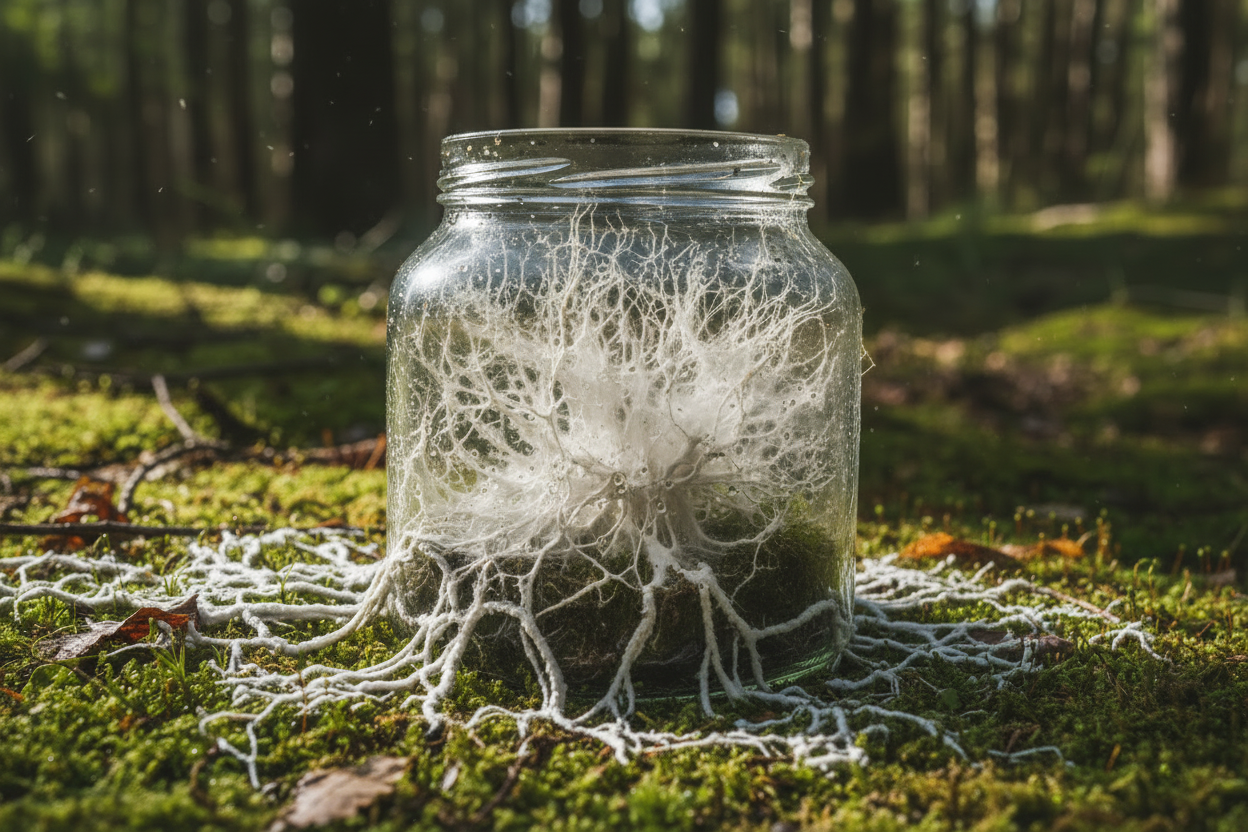
One side effect of not vacuum-sealing is that you might open your jar and find a white fluffy coating on your truffles. This is mycelium, the same organism that produces the truffle itself. Temperature fluctuations and natural CO₂ buildup inside the jar trigger it to keep growing after harvest. It's a sign the product is still alive and fresh. You can shake or wipe it off before consuming if you prefer.
Every decision we make around packaging comes back to the same thing: delivering the best possible product. Switching to glass was a meaningful step in that direction, and it's one we're proud of.